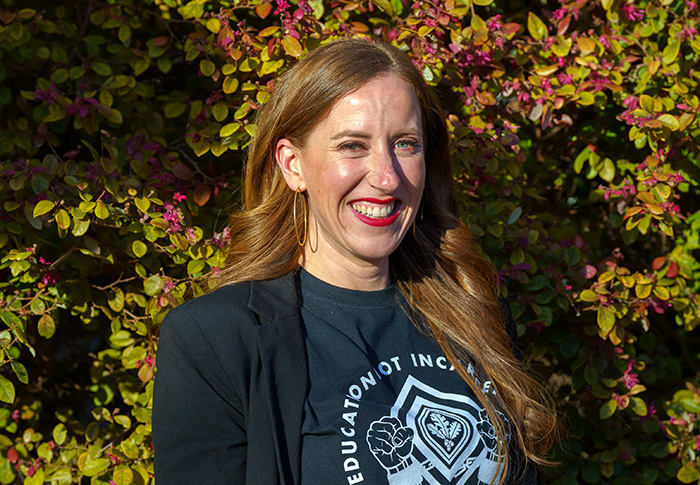
and Social Work and Human Services Program Coordinator
November 3, 2025, Santa Rosa, CA — Santa Rosa Junior College (SRJC) is among the first three California community colleges to receive full designation as a Certified Wellness Coach Designated Education Program from the California Department of Health Care Access and Information (HCAI).
The designation recognizes SRJC's program for meeting state requirements to prepare students for careers supporting the mental, emotional, and behavioral health of children and young adults. Shasta College and Southwestern College also received full designation, making them the first three California community colleges to achieve this status.
The designation is part of a $6.1 million statewide investment to strengthen California's behavioral health workforce through the California Community Colleges system. Administered through a partnership between HCAI and the Foundation for California Community Colleges, the initiative is part of the state's Children and Youth Behavioral Health Initiative, which aims to expand access to behavioral health support for young people ages 0 to 25.
"Santa Rosa Junior College is honored to be among California's first Certified Wellness Coach programs, a recognition that speaks to the passion and perseverance of everyone who helped make it possible," said Jessica Paisley, SRJC Counseling faculty member and Social Work and Human Services Program Coordinator. "Mental health support for young people has never been more critical, and I am thrilled that our graduates will be on the front lines of that work right here in Sonoma County."
Through the program, students gain the knowledge and skills to provide non-clinical behavioral health support, including prevention and early intervention services in youth-serving settings. The certification provides an additional career pathway for students interested in making a difference in the lives of children, young adults, and families.
SRJC graduates are already putting their training into practice. Through a partnership with Keystone Therapy and Training Services, graduates are working in the community to support youth in Santa Rosa and throughout Sonoma County.
One student pursuing the certification is Joseph Williams, who is studying social work and human services at SRJC. Having spent much of his childhood in foster care, Williams hopes to use his experiences to help young people navigate challenges and build brighter futures.
"I hope to be a mentor for foster youth, to be someone they can genuinely talk to," Williams said. "I wanted to be a police officer when I was younger, but I didn't have anyone to show me how to do that. I want to give these kids the right tools to prepare for their future."
Williams plans to graduate in Spring 2027 and transfer to Sonoma State University. His long-term goal is to open a private school serving foster youth.
The Certified Wellness Coach designation builds on California's broader effort to address shortages in behavioral health professionals, particularly in communities where access to mental health services can be limited. By preparing students for these roles through community college education, the program helps create a more accessible pathway into a growing field while strengthening support for local communities.
Since the initiative launched in February 2024, the Foundation for California Community Colleges has distributed grants to 33 colleges. Grants of up to $200,000 help colleges develop and expand curriculum aligned with HCAI certification standards.
The program also supports the California Community Colleges' Vision 2030 goal of expanding statewide behavioral and mental health workforce development opportunities.
For more information about the Certified Wellness Coach program at Santa Rosa Junior College, visit santarosa.edu.